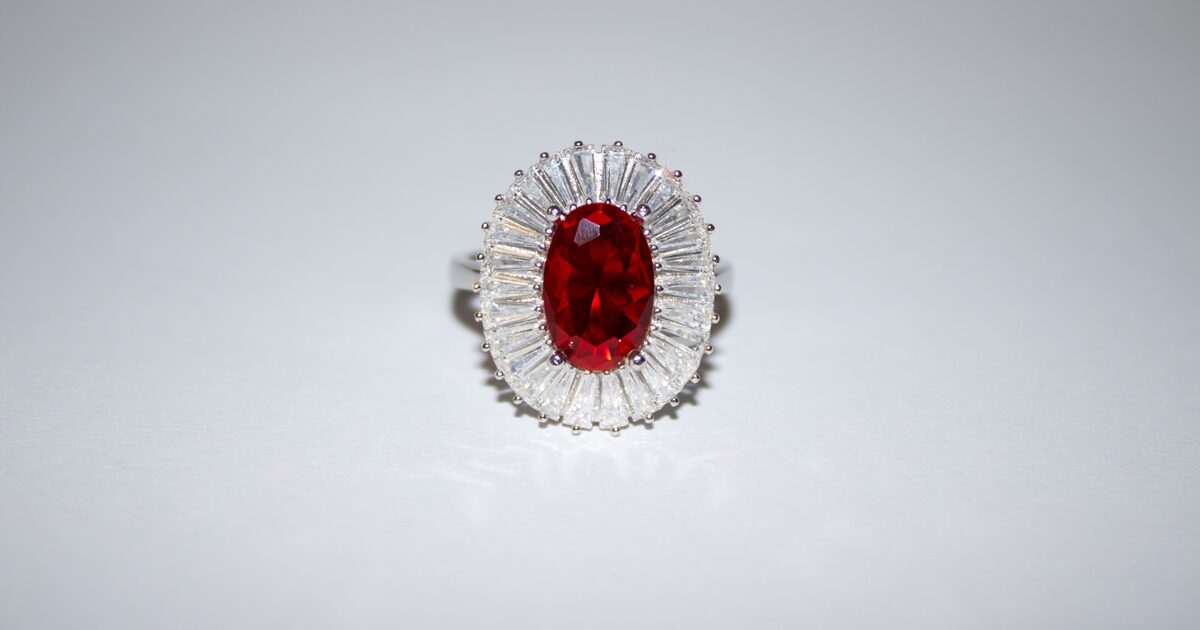
A red stone in an old ring can be many things, and the price gap between them is enormous. Before you insure it or list it for sale, it helps to know how to tell if a ruby is real, and just as important, to recognize the modern trap most home guides skip: the lead-glass composite ruby that looks convincing and is worth very little.
To tell if a ruby is real, start by ruling out a lead-glass composite, then separate natural from synthetic corundum, then from look-alikes like garnet, spinel, and glass. Natural ruby is corundum at Mohs 9, shows fine internal inclusions under magnification, and lacks the gas bubbles and internal glassy flash of composites and imitations.
Below, the checks in the order that catches the most expensive mistakes first, plus the specific tells for each impostor.
Start with the composite ruby, the trap to catch first
A genuine ruby is red corundum. A composite, sometimes sold as “lead-glass filled,” “glass-filled,” or “composite ruby,” is low-grade corundum whose many fractures have been filled with lead glass to make a cheap, cloudy stone look transparent and red. These are widely sold at prices that seem too good to be true, because they are. A composite is fragile: household chemicals, heat from a jeweler’s torch, and even lemon juice can damage the glass, which is why reputable sellers must disclose the treatment. The FTC Jewelry Guides treat undisclosed composite filling as deceptive.
Two tells give composites away under a 10x loupe. First, look for a flash effect: tilt the stone and watch the filled fractures flash a color, often blue or orange, that differs from the body red. Second, look for trapped gas bubbles inside the glassy filler, sometimes rounded and clustered along a fracture. Either sign points to a composite, not a solid natural ruby. Because the value difference is so large, catching this first saves the most money.
Natural versus synthetic corundum
Once a composite is ruled out, the next split is natural versus lab-grown. Synthetic ruby is real corundum with the same chemistry and hardness as natural ruby, but it grew in a lab rather than the earth, and it is worth far less. The most common and oldest process, flame fusion (also called Verneuil), has been producing synthetic rubies for well over a century, so they turn up frequently in older jewelry.
Under magnification, the clues are internal. Flame-fusion synthetics often show curved growth lines, faint curved bands from the way the crystal formed, and sometimes rounded gas bubbles. Natural rubies instead tend to show angular, irregular inclusions: fine needle-like “silk” (rutile), tiny embedded crystals, and straight-edged growth zoning. As a rough rule, curved lines and round bubbles lean synthetic, while irregular natural-looking inclusions lean natural. This is a hint, not a verdict; separating high-quality synthetics from natural stones can require lab instruments, which is exactly what a gemological report provides.
The look-alikes: garnet, spinel, and glass
Not every red stone is corundum at all. Three impostors are common:
- Red garnet is softer than ruby (garnets sit around Mohs 6.5 to 7.5 versus corundum’s 9 on the Mohs hardness scale) and is singly refractive, so it lacks ruby’s optical doubling. Garnet red often reads slightly brownish or orangey next to a fine ruby.
- Red spinel is a genuine gem in its own right, historically confused with ruby for centuries. It is a touch softer (about Mohs 8), singly refractive, and typically cleaner-looking, without the strong doubling of corundum.
- Glass is the giveaway of cheap costume pieces. It is much softer, warms in the hand, and frequently contains rounded gas bubbles and swirl marks. Facet edges on glass round off and scratch with wear, while corundum’s hardness keeps them crisp.
Corundum is doubly refractive, meaning under magnification you can sometimes see the back facet edges appear slightly doubled. Singly refractive stones like garnet, spinel, and glass do not show that effect, which is a useful separator when combined with hardness and inclusions.
The properties every honest check relies on
Ruby is red corundum, a 9 on the Mohs scale, second in hardness only to diamond. That hardness is why genuine ruby holds sharp facet edges and resists the scratches that dull glass and garnet over time. Fine low-iron rubies often fluoresce red under ultraviolet light, though iron-rich stones from many origins fluoresce weakly or not at all, so a faint response is not evidence of a fake. Its red color comes from chromium. Reliable home checks lean on those traits: inspecting inclusions under a loupe, comparing hardness-driven wear, and reading the optical doubling. What home checks cannot reliably do is confirm a stone’s geographic origin or separate a fine natural from a fine synthetic, both of which need laboratory testing. The International Gem Society ruby guide and the GIA Gem Encyclopedia cover those properties in depth.
A practical inspection order
- Loupe for flash and bubbles first. A blue or orange flash in fractures, or trapped gas bubbles, points to a lead-glass composite. Catch this before anything else.
- Study the other inclusions. Curved lines and round bubbles lean synthetic; fine silk and angular crystals lean natural.
- Check hardness clues. Rounded, scratched facet edges suggest a softer look-alike like garnet or glass, not corundum.
- Look for doubling. Doubled back facets fit corundum; their absence fits garnet, spinel, or glass.
- Read the setting and marks. Fine rubies are rarely mounted in throwaway metal. Our ring identification guide walks through reading the mount, prongs, and metal stamps that often corroborate the stone.
Photograph the stone and any inclusions as you go, since clear images are what let anyone give a useful read. Remember too that “real” is only the first question. A genuine ruby’s value still swings with color, clarity, cut, carat, and treatment, and our breakdown of what makes jewelry worth more covers those levers. If the same box holds a clear white stone you are unsure about, how to tell if a diamond is real applies the same disciplined approach to diamonds, and a green stone gets the equivalent treatment in how to tell if an emerald is real. When a stone may carry real value, a gemological lab report or a professional appraisal is the step that settles it; our guide to what a jewelry appraisal costs explains when that spend pays for itself.
The bottom line
To tell if a ruby is real, hunt first for the lead-glass composite’s flash and bubbles, then use loupe inclusions to weigh natural against synthetic corundum, then rule out softer look-alikes by hardness and single refraction. Those checks catch the expensive mistakes and flag the borderline stones for lab testing, which is as far as home methods can honestly take you.
If you want a fast first read on a red stone, scan the piece with GemPeek. The app assesses the likely stone type, the setting and visible marks, materials, condition, and an estimated value range. Treat that as an informed starting point and confirm a valuable or uncertain ruby with a gemologist or certified appraiser before you insure or sell it.