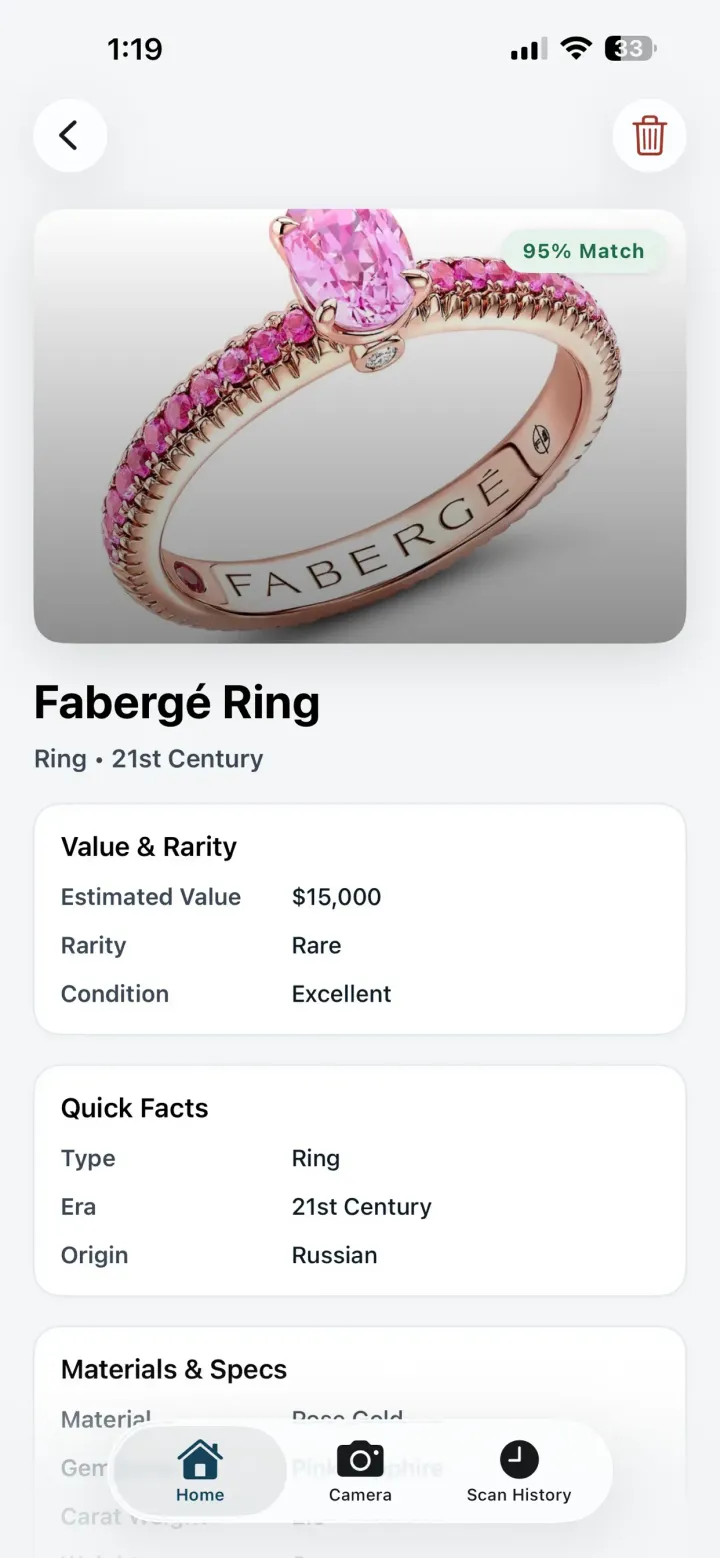
The quickest way to estimate jewelry value is to stop asking whether it simply "looks expensive" and identify the facts that make it comparable to another piece. A clear GemPeek scan gives you the likely jewelry type, visible stone and material clues, style, condition notes, match confidence, and an estimated range. The checklist below helps you sharpen that result with the details the camera may not catch in one photo.
The six clues that shape a jewelry value estimate
- Material and weight. Solid gold, platinum, silver, filled metal, plating, stainless steel, and costume alloys belong to very different comparison groups. Fineness and total weight add important context.
- Gemstones. Identity, size, colour, clarity, cut, treatment, origin, and whether a stone is natural, laboratory-grown, or imitation can change the range substantially.
- Maker and marks. A recognizable signature, hallmark, assay mark, serial number, or reference can turn a generic search into a specific maker or model comparison.
- Construction and craftsmanship. Solid or hollow links, hand finishing, stone-setting quality, matching, clasps, hinges, and original components affect both quality and desirability.
- Condition and completeness. Missing stones, worn prongs, stretched links, damaged enamel, replaced parts, repairs, heavy polishing, and lost packaging all change what buyers compare.
- Provenance and demand. Documentation, ownership history, design period, rarity, collector interest, and current demand can matter as much as raw materials.
How to estimate jewelry value step by step
- Identify the piece precisely. Replace broad labels such as "gold ring" with the best available description: ring type, setting, stone shape, metal colour, marks, design style, and condition.
- Photograph every mark. Check inside bands, beside clasps, on pendant backs, earring fittings, watch case backs, bracelet hinges, and small end tags. Search the exact letters and numbers.
- Record measurements. Note total weight when available, dimensions, chain length, ring size, stone measurements, watch case width, and any matching components.
- Choose true comparables. Compare the same piece type, material, stone arrangement, maker, age, size, and condition. A visually similar plated piece is not a useful comparison for a solid precious-metal piece.
- Look at sold evidence. Active listings show what sellers hope to receive. Completed sales and reputable auction results show where transactions have actually occurred.
- Keep the range, not one perfect number. Differences in testing, condition, venue, fees, documentation, and buyer demand make a defensible range more useful than false precision.
Use the right value for the decision
"What is it worth?" can mean different things. A quick private sale, a specialist auction, a dealer offer, a retail replacement, and an insurance schedule do not use the same market or purpose. Decide which question you are trying to answer before choosing comparable pieces. GemPeek is most useful for orienting your research and showing which visible details may move the range.
Choose a guide for your jewelry type
- Ring identifier: find out what kind of ring you have: learn the styles, marks, construction details, value clues, and photo angles that matter for rings.
- Necklace identifier: recognize chains, pendants, and strands: learn the styles, marks, construction details, value clues, and photo angles that matter for necklaces.
- Bracelet identifier: discover what kind of bracelet you have: learn the styles, marks, construction details, value clues, and photo angles that matter for bracelets.
- Earring identifier: recognize styles, backs, stones, and marks: learn the styles, marks, construction details, value clues, and photo angles that matter for earrings.
- Watch identifier: research a jewelry watch from photos: learn the styles, marks, construction details, value clues, and photo angles that matter for watches.
Build a better evidence set before you compare
Take one complete front photo, then add the reverse, sides, clasp, hinge, band interior, case back, stone settings, and every mark. Include boxes, receipts, certificates, service records, spare links, and matching pieces. Read the full jewelry identification photo guide for a repeatable shot list.