Jewelry becomes more valuable when desirable materials, stones, maker, craftsmanship, condition, provenance, and market demand come together in one piece. No single clue settles the question. A large stone can be imitation, a modest-looking chain can contain substantial precious metal, and a signed costume piece can attract collectors because of the designer.
The short answer: identify the piece before you price it
A useful value estimate starts with a specific description. “Old ring” is too broad. “Vintage cluster ring with an oval blue centre stone, white metal, bead-set accents, and a maker mark inside the band” creates a much narrower comparison set.
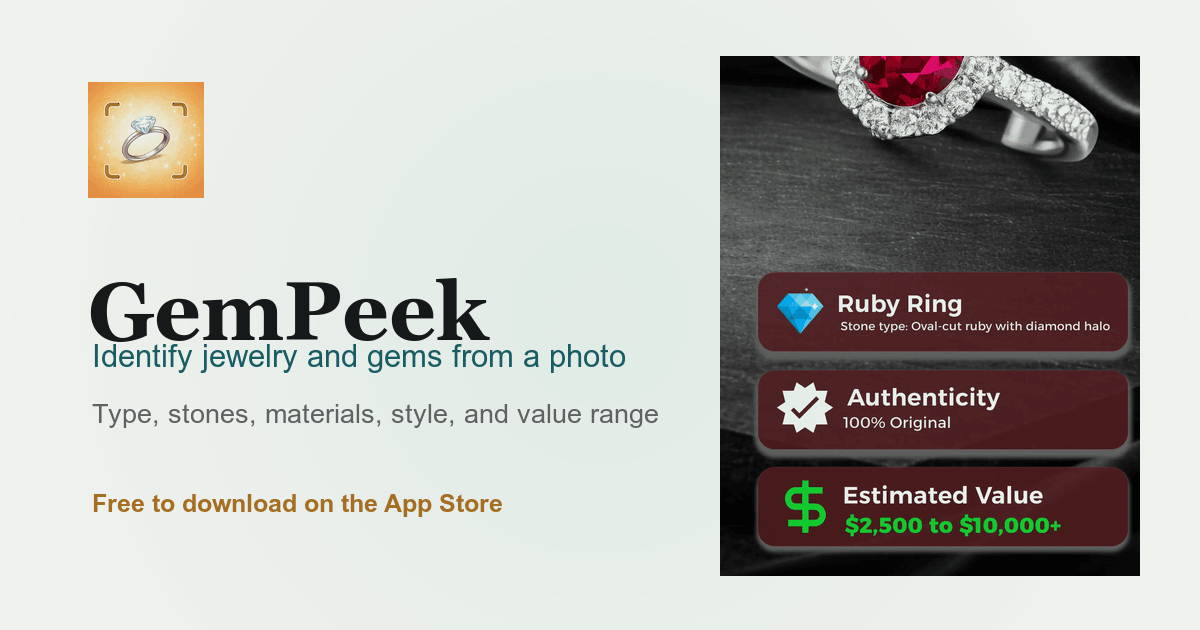
GemPeek helps turn a photo into that kind of structured description. The result gives you the likely jewelry type, visible material and gemstone clues, style, condition notes, match confidence, and an estimated value range. The factors below explain why that range can move.
1. Material and weight
Metal type and fineness affect the baseline comparison. Solid gold, platinum, sterling silver, gold-filled metal, plating, stainless steel, and costume alloys should not be grouped together just because the colour looks similar in a photo. Total weight also matters, particularly for plain chains, bangles, bands, and heavy settings.
Look for fineness or karat marks inside a ring, near a clasp, on a pendant back, inside a cuff, or on a watch case. Record the exact mark rather than translating it from memory. The most common one people find is 925, and it is worth knowing exactly what 925 means on jewelry before you price the piece. On yellow metal the same discipline applies to the karat stamp, and how to tell if gold is real covers what the marks, the magnet, and proper testing each settle.
2. Gemstone identity and quality
Stone identity, size, colour, clarity, cut, treatment, origin, and whether the material is natural, laboratory-grown, or imitation can all change value. Matching also matters: a row of well-matched stones or pearls is a different comparison from a mixed or visibly replaced set.
Cut style can also date a stone. A squarish outline with a high crown and a visible culet points to an old mine cut diamond, a hand-cut antique that is usually worth keeping rather than recutting.
Use the photo to describe what is visible: colour, transparency, cut shape, number of stones, symmetry, setting style, and condition. Keep certificates and laboratory reports with the piece because they can answer questions a photograph cannot.
3. Maker, brand, and reference
A signature, maker mark, assay symbol, serial number, patent mark, or model reference can transform the search. Instead of comparing every similar-looking bracelet or watch, you may be able to compare a specific maker, collection, design, or production period.
Photograph the mark in context, then take a tighter close-up. Search the exact sequence and check whether the construction of the piece matches the attributed maker.
This is where costume jewelry breaks the usual rule that materials drive value. A signed designer piece can outsell an unsigned piece with better metal, which is exactly the question our guide to whether costume jewelry is worth anything walks through.
4. Craftsmanship and construction
Value can reflect how a piece was made, not only what it contains. Inspect whether links are solid or hollow, settings are clean and secure, stones are evenly matched, hinges move well, clasps close positively, engraving is crisp, enamel is complete, and separate parts fit as intended.
Construction also helps separate a durable, carefully finished piece from one designed around surface appearance alone.
5. Condition and originality
Missing stones, worn prongs, cracked enamel, stretched links, damaged clasps, deep scratches, dents, plating loss, replacement parts, solder repairs, and heavy polishing all affect what a buyer is comparing. On watches, originality of the dial, hands, crown, bracelet, and other reference-correct parts can be particularly important.
Do not hide damage in your research photos. A realistic estimate needs the same condition evidence a buyer would see.
6. Provenance and completeness
Original boxes, receipts, certificates, service records, spare links, matching pieces, and documented ownership can strengthen the evidence around an item. A family story is useful context, but dates, names, photographs, invoices, and other records make the history easier to research.
7. Rarity and demand
Rare does not automatically mean desirable, and common does not automatically mean cheap. Value rises when the available supply meets active demand from collectors, wearers, dealers, or a particular market. Design trends, metal prices, fashion cycles, maker reputation, and the venue where a piece is sold can all affect the final result.
Compare sold examples, not the highest listing
Active listings show asking prices. They do not show whether a buyer agreed. Search completed sales, reputable auction archives, and relevant dealer results. Then filter for the same material, maker, stone arrangement, size, age, condition, and completeness.
Keep a small comparison table with:
- item description and source
- sold date and selling venue
- material, stones, maker, and dimensions
- condition and included paperwork
- sale price and any visible buyer’s premium or fees
Three close comparisons are more useful than dozens of loosely similar listings.
Use the correct guide for the piece
The most useful clues vary by category. A ring often depends on its setting, inside marks, and stone arrangement. A necklace is easier to compare when you know the chain pattern, length, clasp, pendant, and weight. A bracelet needs clear construction and closure details.
For earrings, pair completeness and original fittings matter. For a watch, dial text, case-back references, movement, originality, accessories, and service history can drive the research.
Turn visible clues into a useful estimate
Photograph the complete piece, marks, reverse, fastening, settings, and condition using the jewelry identification photo checklist. Then scan the strongest image with GemPeek and use the structured result to choose better comparables. Metal content is one of the clearest levers, so confirm whether a gold-look piece is solid, gold filled, or only plated before you anchor on any figure. The full jewelry value estimator guide takes you through that process step by step.
For most pieces that research is enough. A paid appraisal answers a narrower question, usually insurance or an estate, and it is priced by the hour or by the item rather than by what your jewelry turns out to be worth. Our guide to what a jewelry appraisal costs covers the fee structures, the percentage-of-value red flag, and when you can skip the appointment entirely.